“In the glare, the great and terrible light of this happening, God seems to signal that the story of the rest of us need not end, and that the new light can prove a troubled dawn.
For the rest of us, perhaps. Not for the dead, not for the more than fifty million real dead in the world’s worst catastrophe: victors and vanquished, combatants and civilians, people of so many nations, men, women, and children, all cut down. For them there can be no new earthly dawn. Yet thought their bones like in the darkness of the grave, they will not have died in vain, if their remembrance can lead us from the long, long time of war to the time for peace.”
Herman Wouk, War and Remembrance
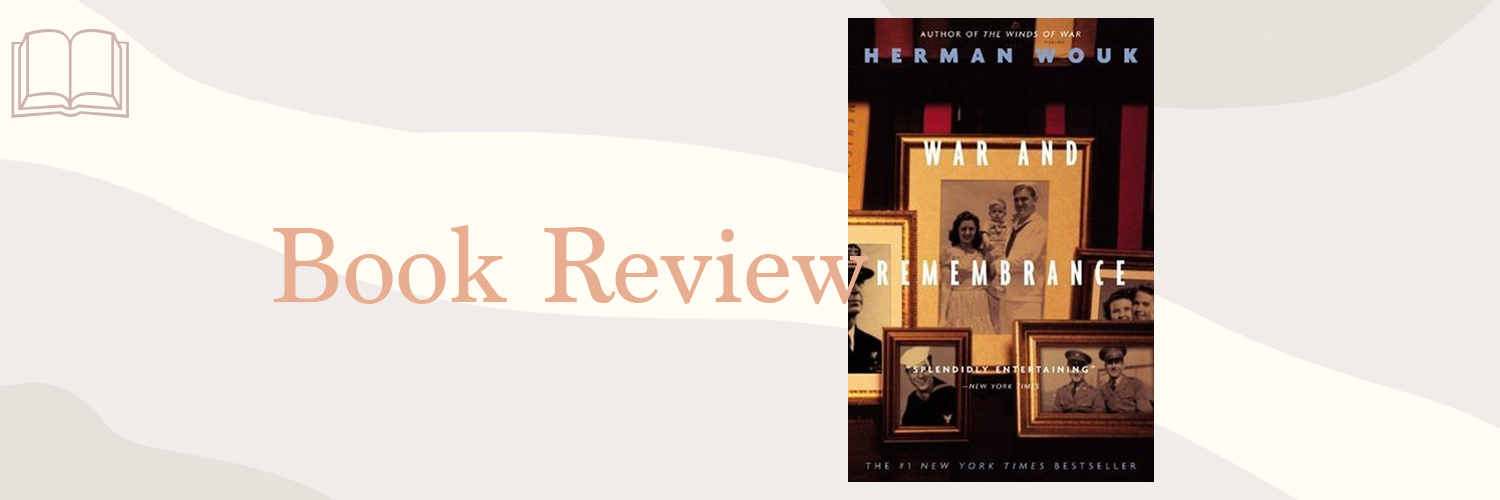
Title: War and Remembrance
Series: The Henry Family (Book 2)
Author: Herman Wouk
Genres: Classics, Historical Fiction
Length: 56 hrs, 3 mins
Published: 1978
My Rating: ★★★★
Read: 1/4/2024 – 1/13/2024

Review:
When I started The Winds of War, I told myself I wasn’t going to get so invested that I went on to War and Remembrance. Where the action had significantly picked up at the end of book one, I found myself not only invested, be eager to read book two. The beginning of the book maintained the faster pace that concluded the previous and I was ecstatic. However, this is still a 1000+ page book. It slowed down again. While consistently interesting, it is long.
Picking up after the bombing of Pearl Harbor, the book continues to follow the members of the Henry family (Pug, Rhoda, Warren, Byron, and Madeline) as well as Byron’s wife Natalie and their son Louis, her uncle Aaron Jastrow, Pamela Tudsbury, and a few others. Each of them is facing a different aspect of the war: Pug, Byron, and Warren in the Pacific, Natalie, Louis, and Aaron in Europe evading the Nazis at all costs, and Rhoda and Madeline on the Homefront. Their circumstances offer unique perspectives of war to the pages, perhaps most profoundly Aaron Jastorw’s ‘A Jew’s Journey’ facing antisemitism and the Holocaust.
Like The Winds of War, there are multiple mediums of writing that discuss the characters’ lives as well as general World War II history. Both are interesting, but having them side by side in a single narrative breaks the flow of storytelling immensely. While the characters are in 1943, the next chapter can talk about the end of the war — events that the characters have yet to experience. I found it distracting and sometimes frustrating.
Another issue I have is with the way the book is organized. Even though the book is broken up into different parts and names the key event of that section, most of the time a majority of the chapters are not even focused on the characters named or the situation highlighted. The narrators are inconsistent, and despite having spent so much time reading, there are still some characters that made such a brief appearance that I had no idea who they were and why they were suddenly telling the story from their point of view. Other instances left characters completely abandoned, such as Janice Henry and for the most part, Madeline, who may as well have not existed at all. I didn’t find much purpose to her character in the first book and she had even less of a purpose in this book. Her life gets put together in the background with little reference to book one.
My complaints aside, I do think this is a wonderful work of historical fiction. The writing is thorough as well as the research, and though it makes for chaotic storytelling, it is interesting that the book covers so many different aspects of life during the war right down the the strain on families. I wish it spent a little less time on the ‘romances’, as the characters have such little room to develop strong personalities and a rapport with the reader, but I digress. Given the time the book was written and published, the length of both of the books is not surprising with all the research that had to have been collected. If someone plans on only reading one work of World War II fiction, this would be the one I would suggest for the history factor alone. It’s above all an informative read even for someone well-versed in this time period.
Likes & Dislikes:
What I liked:
- Paints an intimate portrait of and individual during the Holocaust.
- Extreme attention to historical detail.
What I didn’t like:
- The book as a whole feels unnecessarily wordy. So much could be cut and the same story could be told. (Looking back, I said almost the exact same about The Winds of War. Oops.)
- As I quibbled with the first book, the random nonfiction facts mess up the flow of the book.
- There are so many random characters that come and go and get forgotten.
Afterthoughts:
I never would have touched these books if it hadn’t been for a recommendation. Thank you, Fr. Kwang!
Leave a Reply